Table of contents
From Tokyo’s backstreets to Lisbon’s miradouros, city excursions have become one of the fastest-growing ways people consume culture on the move, and the change is not just anecdotal. As overtourism pressures mount and travelers look beyond postcard landmarks, short, hyper-local outings are quietly reshaping what “authenticity” means, who gets to narrate a city, and how money circulates through neighborhoods. The question now is less where visitors go, and more what they learn, remember, and take home.
Culture now happens in the side streets
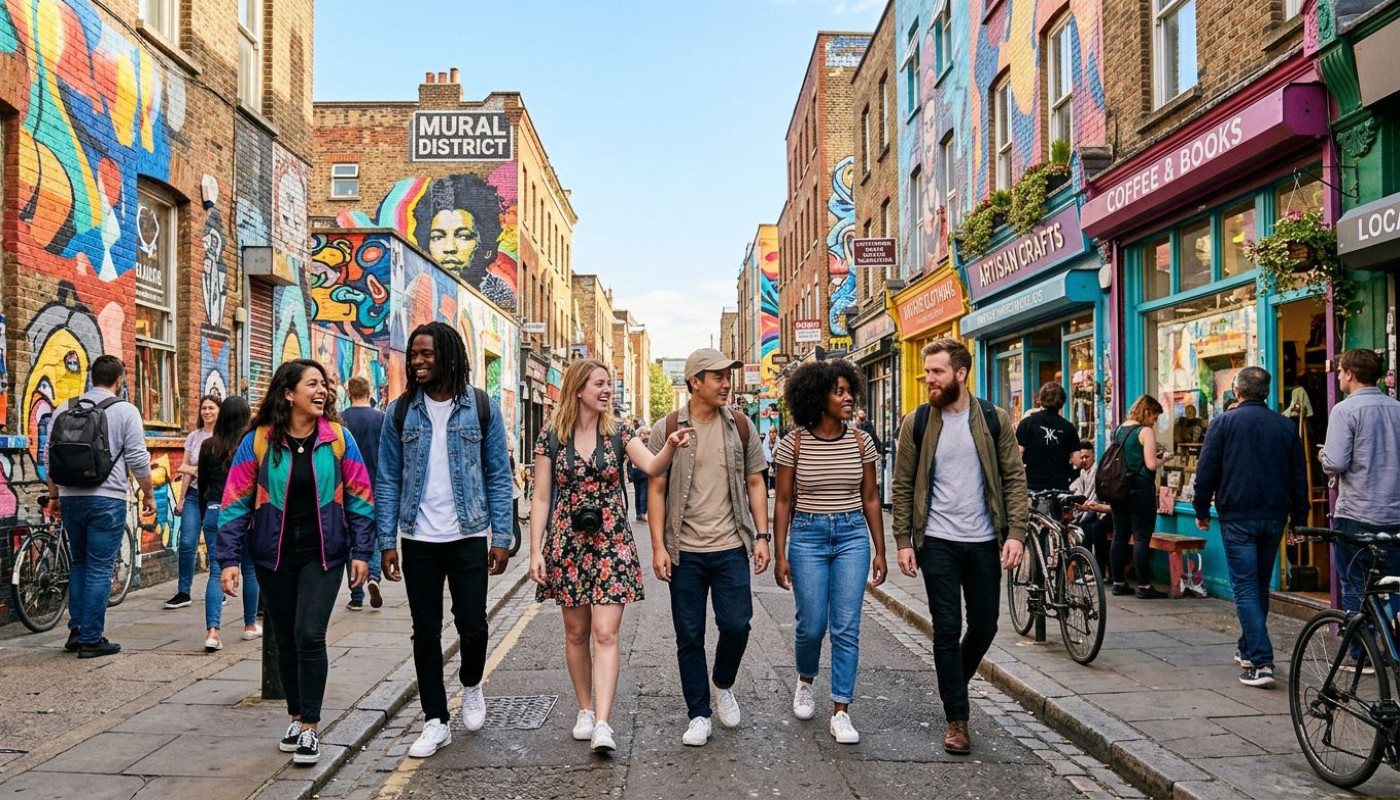
Forget the museum-first reflex; the cultural battleground has shifted to bakeries, courtyards, riverbanks, markets, and the daily choreography of ordinary streets. In many cities, the most meaningful “heritage” for visitors is no longer confined to monuments but embedded in living routines, and excursions built around neighborhoods make that visible. A guided walk through a district can decode architecture, yes, but it also explains why the grocery store sells certain brands, how migration shaped the local palate, why cafés open late, or how an old industrial site became a youth cultural hub. That kind of reading of the city turns the visitor into an informed observer rather than a spectator passing through.
Data underlines the shift. City tourism keeps accelerating: in Europe alone, commercial accommodation recorded more than 2.9 billion tourist nights in 2023, according to Eurostat, a level that highlights both demand and the pressure on historic centers. Meanwhile, the “experience economy” continues to outpace traditional sightseeing in traveler intent; surveys by major travel platforms repeatedly show that guided activities, food tours, and themed walks are among the most-booked products in urban destinations. The logic is simple: an excursion compresses context into a few hours, and in an era of short breaks and remote work, travelers want maximum meaning per day.
Yet the cultural consequence is more complex. When visitors spend time in residential streets, they encounter the city’s uncurated layers, including social tensions, gentrification, and the gap between the official narrative and everyday reality. A well-researched excursion can introduce uncomfortable truths, from housing shortages to the legacies of empire, and that shifts the relationship between tourists and locals. It turns “local culture” into something dynamic and contested, rather than a product on a shelf, and it encourages the traveler to understand that culture is not only what is preserved, it is what is lived.
Guides are becoming the city’s interpreters
Who gets to explain a place? That question is central to how excursions reshape cultural understanding. The guide, whether professional historian, trained local, or specialist in food, architecture, or music, increasingly functions as an interpreter of urban life. In practice, this can counterbalance the flattening effect of mass tourism, because a good guide anchors stories in specific addresses, specific people, and verifiable history, and that specificity is what creates trust. A neighborhood is no longer “charming”; it becomes the site of a 19th-century labor struggle, a wartime scar, a post-1989 property boom, or a contemporary creative scene.
There is also an economic dimension that changes what gets told. In many European cities, short excursions are a way for small operators, independent historians, and local families to earn income outside the traditional hotel and transport chains. That matters because tourism revenue is notoriously unevenly distributed: large intermediaries can capture a significant share of spending, while residents bear the costs of crowding and rising prices. Excursions that start and end in neighborhoods, and that include small food businesses or craft workshops, can keep more money circulating locally, provided the model is fair and transparent.
But the “guide as narrator” comes with risk. Social media has turned certain stories into commodities, and some excursions chase virality rather than accuracy. Oversimplified myths, exaggerated legends, and “hidden gem” rhetoric can erase the very communities that created the culture being sold. That is why editorial rigor matters, even in leisure: sources, dates, and context are not academic niceties, they are the difference between cultural understanding and cultural consumption. When excursions take their role seriously, they teach visitors how to read a city critically, including how to spot the difference between tradition and performance.
Overtourism is rewriting the excursion map
The new excursion landscape is also a response to a hard reality: too many people, in too few places, at the same time. Venice, Barcelona, Amsterdam, Paris, Prague, and others have all wrestled with crowding, and municipal policies increasingly aim to spread visitors beyond the most saturated areas. That is not only about comfort; it is about infrastructure, housing, and liveability. Day-trippers can strain public space without contributing much to the local economy, and that pushes cities to favor longer stays, responsible behavior, and activities that disperse flows.
Prague illustrates the dilemma vividly. The Czech capital has long attracted large volumes of visitors, and its historic core can feel like a stage set at peak hours. Yet Prague is also a city of neighborhoods with distinct identities, from riverfront quarters to hilltop residential streets and post-industrial districts, each with its own texture and history. City excursions that move beyond the Old Town can reduce pressure on the most crowded arteries, while giving travelers a more accurate sense of the city’s social geography. For visitors who want to structure their time without defaulting to the same checklist, resources such as www.prague-trip.com can help plan outings that match interests, timelines, and tolerance for crowds, and that planning can be the difference between a day spent queueing and a day spent understanding.
Public policy is catching up, sometimes bluntly. Several European cities have introduced or raised visitor levies, tightened rules on short-term rentals, and limited access to certain areas or group sizes. The intent is clear: protect residents and preserve heritage, while keeping tourism economically viable. Excursions sit at the intersection of these goals. Small-group formats, timed entries, and routes that avoid bottlenecks are increasingly not just a preference but a necessity. For travelers, that changes cultural perception: the city feels less like an open-air theme park and more like a shared space with rules, trade-offs, and a resident population that does not exist for the visitor’s convenience.
What travelers take home is changing
What is the souvenir of a modern city trip? Increasingly, it is not an object but a framework: the ability to decode a place. Excursions that foreground everyday life can leave travelers with practical cultural literacy, from how to order in a local style, to what behaviors are considered respectful, to why certain neighborhoods feel wealthier, louder, or more politically charged. That literacy matters because it shapes future behavior. A visitor who understands how fragile housing markets can be in tourist-heavy districts may think twice about booking an illegal short-term rental, and a visitor who learns the local etiquette of public transport or sacred spaces is less likely to create friction.
At the same time, excursions reshape memory. Traditional sightseeing often produces a uniform recollection: the same skyline photo, the same bridge at sunset, the same crowded square. Neighborhood-based experiences produce differentiated memories: the name of a baker, the story behind a mural, the sound of a local music scene, the context of a political poster. Those details anchor a city in reality, and they make it harder to reduce “local culture” to stereotypes. This is also why culinary excursions have become cultural gateways; food carries migration histories, trade routes, class distinctions, and seasonal rhythms, and a single dish can open a conversation about identity more effectively than a plaque on a wall.
There is a final, more intimate shift. When travelers engage with local culture through excursions, they often confront their own assumptions about what is “authentic.” Authenticity stops being a promise and becomes a negotiation: between residents who want to live normally, businesses that need customers, and visitors who want meaning without causing harm. The best excursions do not pretend to solve that tension, they expose it carefully and honestly. They show that local culture is not a museum artifact; it is an ongoing story, and the visitor is reading one chapter, not owning the book.
Planning a smarter city day
Book early for peak weekends, and choose small groups if you can; they move faster and disturb less. Budget beyond the ticket price, because tips, tastings, and local transport add up quickly. Check local city passes and museum bundles, and look for discounts for students and families, as many European cities offer reduced rates and occasional free-entry days.
Similar articles

From Sunrise Hikes To Midnight Markets: Crafting Experiential Travel Days That Feel Limitless

Lost Or Led? Real Stories Behind Spontaneous Trip Itineraries
Journeys Beyond The Itinerary: Embracing The Art Of Getting Lost

Hidden Crossroads: The Power Of Overlooked Destinations In Shaping Travel Stories

Is Hidden Gem Tourism The Antidote To Overcrowded Travel Hotspots?

How To Structure A Multi-Destination Holiday For Every Budget?

Exploring The Charm Of Paris's 13th District: A Cultural And Historical Guide

How Ethical Safaris Enhance Your Cultural Encounter Experience?

How To Plan An Unforgettable Sailing Itinerary For Beginners

Exploring The Hidden Gems Of NYC's Five Boroughs: A Family Adventure Guide
